
Who Should Choose the Excess 14? A Buyer Profile Guide
A detailed buyer-profile framework to evaluate whether the Excess 14 aligns with your cruising ambition, operating discipline, and ownership economics.
Read article
A deeper first-season learning guide that explains the seven most common catamaran ownership mistakes and how to correct them with practical routines.
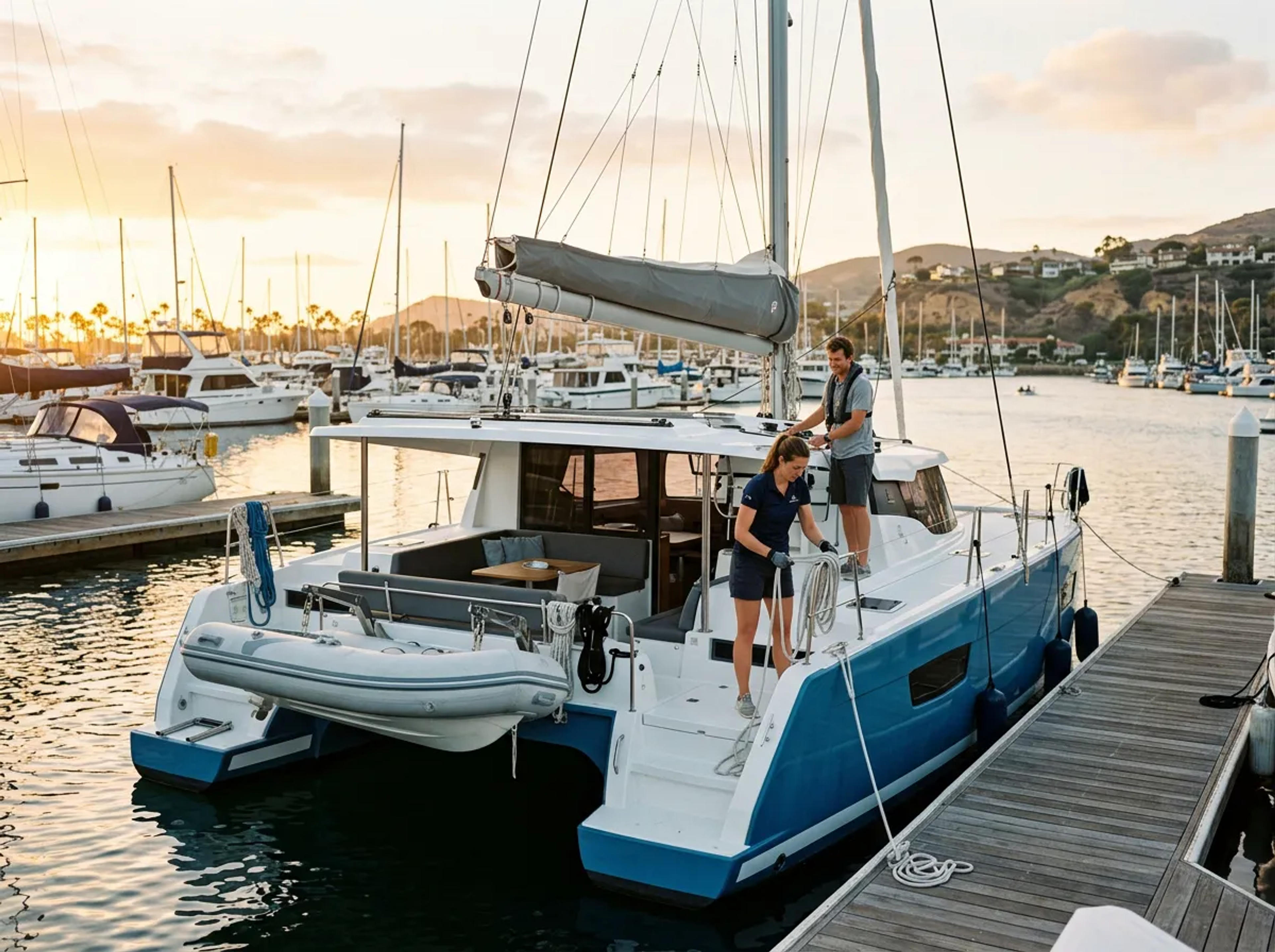
First-season ownership is exciting, but it can also feel noisy. You are learning systems, weather patterns, crew dynamics, and boat behavior at the same time.
That is why mistakes are not a red flag by themselves. The real risk is repeating the same pattern without a correction loop. Owners who improve fastest are rarely the ones with perfect outings. They are the ones who convert each outing into a clear next action.
Keep this article connected to ownership resources and Excess model context so your learning priorities stay aligned with your long-term plan.
Most first-season errors come from overload, not carelessness. Too many priorities, too little role clarity, and delayed feedback create unstable decisions.
The seven high-frequency mistakes are:
These errors are common because they feel harmless in isolation. Together, they create cumulative friction that slows progress.
When an outing goes poorly, crews often focus on who made a mistake. High-performing crews focus on what in the system allowed the mistake to happen.
That shift changes everything. You stop defending and start learning. Instead of repeating "we need to be better," you define one specific process update and test it on the next outing.
Top tip
A sustainable learning loop is simple: one objective before departure, one debrief after return, one change for next time.
Safety and weather references are most valuable when they are integrated into your pre-departure process:
The point is not to consume more information. The point is to make fewer avoidable errors by using the right information at the right time.
Treat each outing like a focused practice block, even on leisure days. If your objective is maneuver communication, keep that objective visible throughout the day. If the objective is energy management, document what actually happened instead of what was planned.
Over a season, this disciplined simplicity compounds quickly. It also makes your broader ownership decisions stronger because you are learning from evidence, not impressions.
For related practice, pair this with docking habits in wind and first-year budgeting.
Regular frequency helps, but quality of repetition matters more than raw hours. A short outing with one clear objective and a disciplined debrief can produce more learning than a long outing with no structure. The goal is not to accumulate miles; it is to accumulate useful decisions. Consistency over time is what transforms confidence.
Choose one objective that is specific enough to observe and review. For example, "clean crew communication in docking sequence" is better than "sail better today." A clear objective helps everyone onboard prioritize the same signals. It also makes debriefs faster because success criteria were defined upfront.
Very common, especially when owners underestimate recurring small costs and overestimate usable sailing days. Budget mistakes are rarely dramatic in one month, but they become significant over a season if not corrected early. Monthly review with reserve discipline usually solves most issues before they grow.
Yes, and that is one reason first-season crews should keep plans adaptable. Marine conditions can change enough within short windows to alter route, maneuver complexity, and crew workload. A good plan includes clear pivot points instead of rigid commitments. Flexibility is a strength, not a sign of weak planning.
Ten to fifteen focused minutes is usually enough. Keep it simple: what worked, what drifted, what single change we test next time. Avoid turning debrief into a long retrospective; long sessions often dilute action quality. The best debrief is short, clear, and immediately actionable.
Seek guidance when the same blocker repeats despite consistent effort. External perspective can identify blind spots quickly and reduce trial-and-error cycles. This is especially useful for close-quarters handling, crew communication, and ownership process design. Good guidance should make your next outing clearer, not more complicated.
Keep reading for more Excess updates, sailing tips, and stories from the cruising community.
A detailed buyer-profile framework to evaluate whether the Excess 14 aligns with your cruising ambition, operating discipline, and ownership economics.
Read articleA deeper practical analysis of why the Excess 13 is often a strong California balance point between sailing feel, onboard usability, and ownership flexibility.
Read article