
Who Should Choose the Excess 14? A Buyer Profile Guide
A detailed buyer-profile framework to evaluate whether the Excess 14 aligns with your cruising ambition, operating discipline, and ownership economics.
Read article
A detailed model-fit analysis explaining when the Excess 11 is a strong choice for extended cruising and where structured tradeoffs matter most.
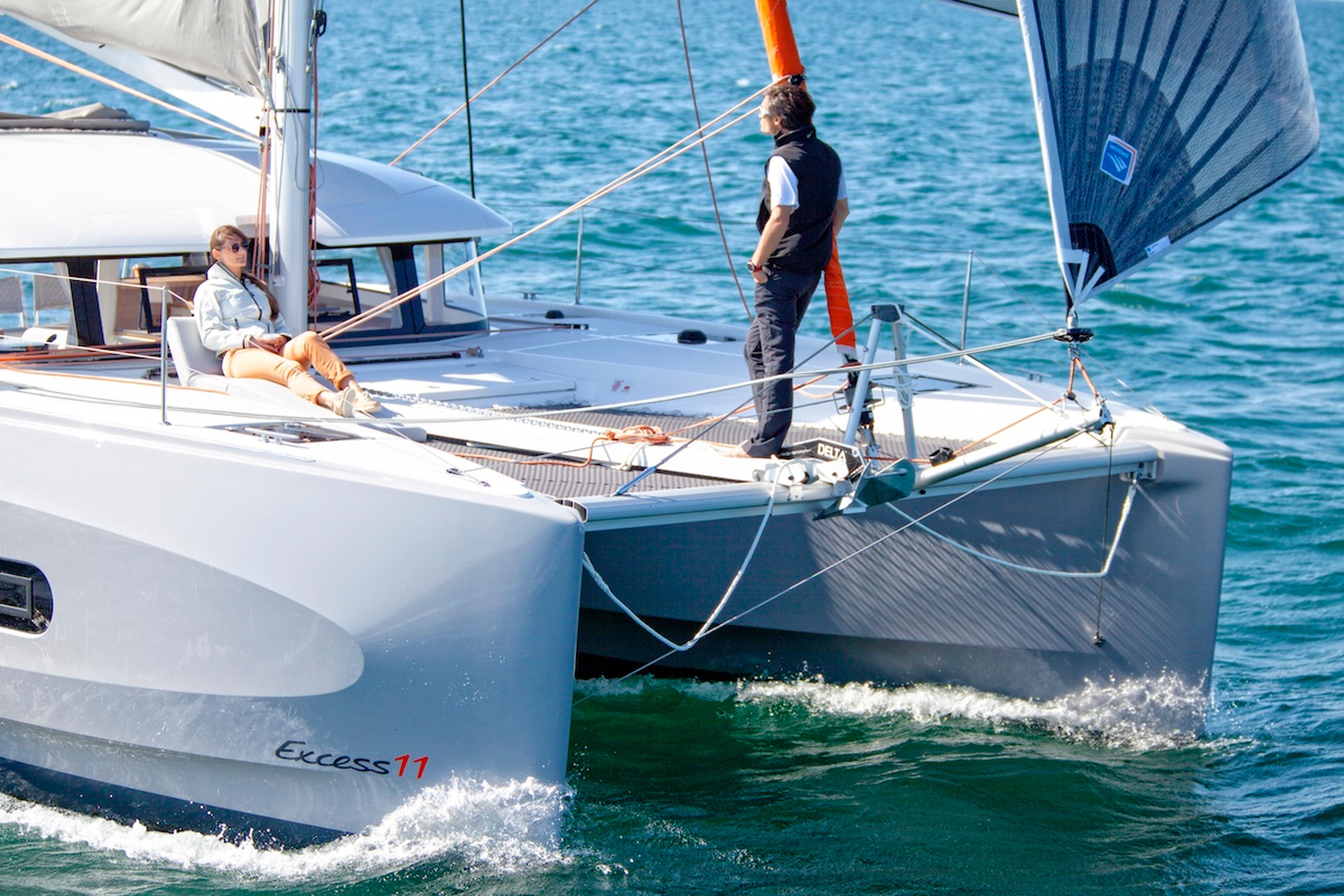
When buyers ask whether the Excess 11 is "enough" for extended cruising, they are usually asking two different questions at once.
First: can the boat do it? Second: can my crew and ownership system do it sustainably? The second question is the one that drives long-term satisfaction.
A model can be technically capable yet still feel mismatched if your expected autonomy, storage behavior, and trip rhythm are not aligned. That is why this decision should be framed around operating reality, not abstract comparison.
Start with Excess 11 vs 13 vs 14 comparison and our Excess page.
The Excess 11 often performs best for crews who value simplicity, sail regularly, and maintain disciplined onboard routines. It rewards owners who enjoy process quality: thoughtful provisioning, clear storage logic, and consistent operating habits.
For many programs, this is a strength, not a limitation. A platform that is used frequently and confidently often creates more real cruising value than a larger platform that is used less.
Top tip
A compact platform magnifies routine quality. If your process is strong, the ownership experience often feels lighter and more enjoyable.
Extended cruising introduces practical pressure points: storage behavior, power and water planning, crew workload distribution, and recovery capacity after weather disruptions. None of these are deal-breakers by default, but each must be acknowledged early.
The most useful way to evaluate tradeoffs is to map your "typical trip" rather than your "ideal trip." Typical trips reveal real constraints. Ideal trips can hide them.
Our founder David, CEO of Sail Tahiti, has sailed extensively on all three Excess models. The best fit usually comes from honest program definition, not from chasing maximum potential.
Use authoritative sources for specifications and perspective:
Then connect those inputs with your own usage matrix and ownership planning so the decision reflects your operational context.
Build a short matrix with four categories: average trip duration, autonomy expectation, comfort threshold, and annual sailing cadence. Score each category honestly for your current reality, not your aspirational future.
If the Excess 11 aligns on most categories, it can be an excellent extended-cruising platform for your profile. If multiple categories require optimistic assumptions, evaluate whether new vs pre-owned pathways or model size adjustments improve fit quality.
Not automatically. Multi-week suitability depends more on crew discipline, provisioning habits, and realistic comfort expectations than on a single length metric. Owners with clear routines often find the platform very workable for extended windows. The key is to test your typical program honestly before assuming either "too small" or "perfect."
Yes, for many profiles it can. California use quality depends on route selection, marina strategy, weather-window discipline, and how consistently your crew executes routines. A well-structured operating plan can make regular use highly practical. Without that structure, even larger platforms can feel inefficient.
Often yes, especially for buyers who prioritize manageable complexity and frequent sailing. First-time owners typically benefit from platforms that reward clear process and reduce operational friction. The main requirement is commitment to learning and routine consistency. When that is present, first-purchase outcomes are often strong.
In most cases, yes. The comparison clarifies where your priorities truly sit between compact efficiency and additional space margin. Even if you end up selecting the 11, seeing the 13 side-by-side improves confidence in your choice. Better comparison usually means less post-purchase doubt.
No, not by default. Larger size can add comfort margin, but it can also increase system complexity and ownership load. The right choice is the model you can operate consistently, confidently, and sustainably over time. Real usage quality beats theoretical maximum capability.
Use a realistic use-case matrix, review your budget assumptions, and test your planning logic against your actual crew profile. If possible, validate with structured guidance rather than informal impressions. Uncertainty drops quickly when assumptions are made explicit and tested.
Keep reading for more Excess updates, sailing tips, and stories from the cruising community.
A detailed buyer-profile framework to evaluate whether the Excess 14 aligns with your cruising ambition, operating discipline, and ownership economics.
Read articleA deeper practical analysis of why the Excess 13 is often a strong California balance point between sailing feel, onboard usability, and ownership flexibility.
Read article