
Who Should Choose the Excess 14? A Buyer Profile Guide
A detailed buyer-profile framework to evaluate whether the Excess 14 aligns with your cruising ambition, operating discipline, and ownership economics.
Read article
A practical strategy for securing and sequencing marina berthing in Southern California with realistic lead times, fallback options, and ownership planning alignment.
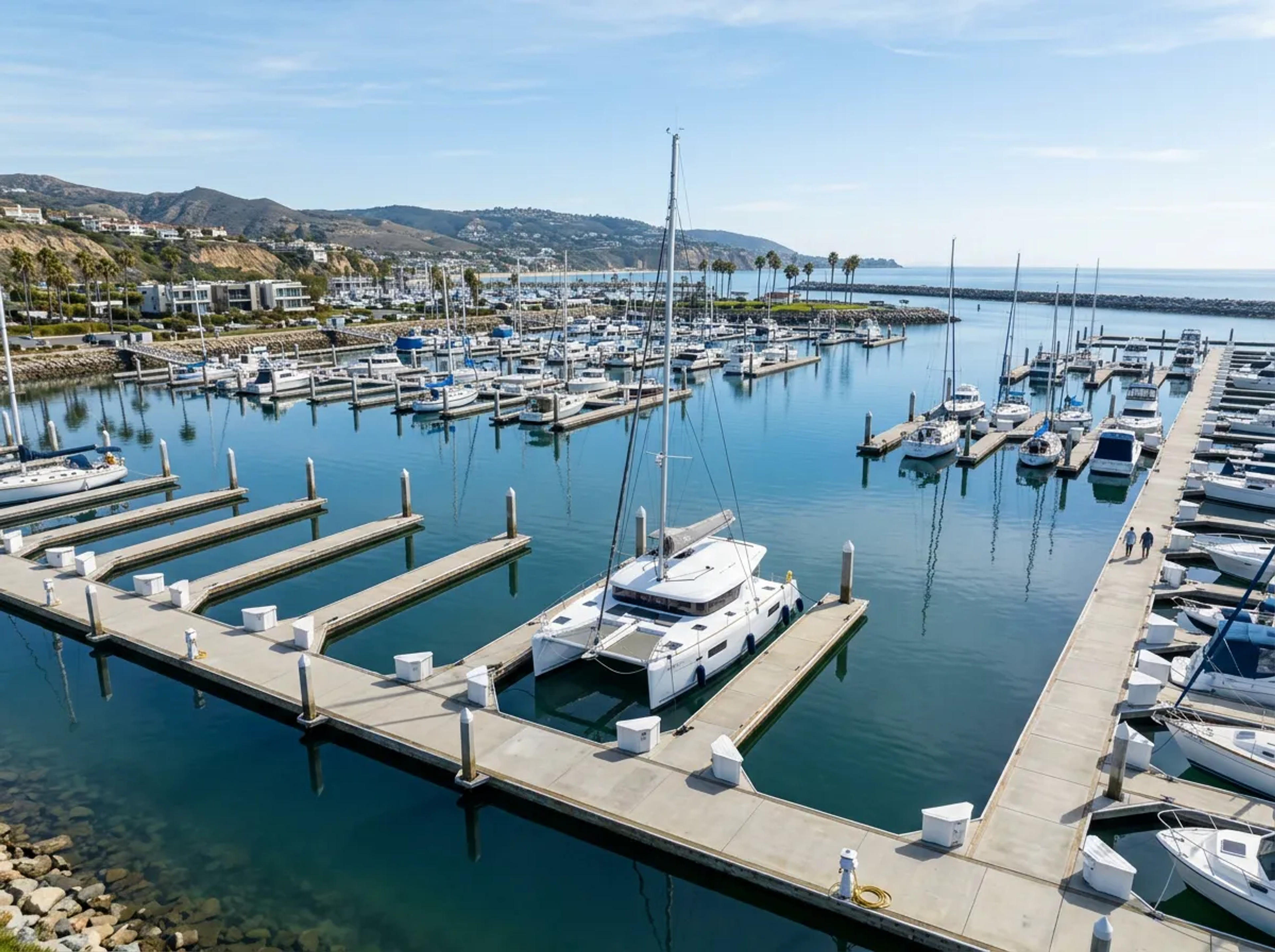
For many buyers, berth planning is not a minor detail after the purchase. It is one of the purchase decisions.
A beautiful ownership plan can stall if slip logistics are treated too late. The opposite is also true: when berthing is planned early, ownership feels calmer from the beginning because launch timeline, operating area, and budget all stay connected.
Pair this article with ownership planning and your Excess model shortlist so slip strategy and model choice evolve together.
In Southern California, lead times and availability patterns can vary significantly by location, berth size, and local policies. Buyers who wait until after closing often face avoidable pressure: rushed temporary options, extra transit complexity, or mismatched service expectations.
Starting early does not mean overplanning. It means building a practical decision map. You identify viable marinas, understand real constraints, and sequence decisions so your first season is usable from day one.
The best slip strategy is not the one that looks perfect on paper. It is the one that keeps your first season operational without forced compromises.
A useful approach is to classify marinas into three tiers: ideal, acceptable, and temporary. This keeps momentum when your preferred berth is delayed and protects you from making reactive decisions under time pressure.
Your ideal tier reflects long-term fit: location, access pattern, services, and operating convenience. Acceptable tier options are still good enough for consistent use, even if not perfect. Temporary tier options are the bridge that prevents schedule drift.
That structure also improves negotiation and timing decisions because you always know your next acceptable move.
Top tip
Keep at least one temporary berth path open until your long-term option is contractually secured. A fallback that is ready beats a perfect plan that is late.
Published dimensions are only the starting point. You still need to validate fairway geometry, turning behavior in wind, and local maneuver constraints at your intended usage times.
Useful public references:
When possible, request practical guidance from marina teams: what beam margin works reliably, which wind angles create congestion, and what arrival windows are operationally easier. These details are often more valuable than brochure-level numbers.
Slip choice should be reviewed with your full first-year budget, not in isolation. A lower headline berth fee can still become expensive if it adds fuel burn, longer transfer time, or more frequent weather cancellations.
This is where scenario planning helps. Build one baseline scenario and one stressed scenario. If both remain operationally and financially viable, your strategy is robust. For budget structure, read first-year ownership budget planning.
Rather than collecting generic brochures, ask targeted operational questions:
The goal is clarity, not volume of information. A shorter list of high-value answers is more useful than many vague details.
As early as possible in your purchase path, ideally before final model commitment. Early research gives you decision leverage and prevents compressed timelines that force expensive compromises. Even if your preferred berth is available later, early positioning helps you sequence delivery and commissioning with fewer disruptions. In practice, early slip planning usually saves both stress and money.
Not necessarily, because berth value is more than monthly fee. Location efficiency, service access, weather exposure, and maneuver practicality can significantly affect total ownership friction. A slightly higher berth fee may produce a lower total cost if it increases usable days and reduces operational complexity. Evaluate value as a system, not a single line item.
No, and in many cases it is the most strategic solution. A well-chosen temporary berth keeps your first season active while preserving optionality for a long-term move. It also gives you real operational data before committing to a permanent location. Temporary does not mean unstable when planned with clear milestones.
Validate constraints in writing and then verify real operating conditions with marina staff. Ask specifically about fairway pressure points, crosswind behavior, and practical turning margins during busy periods. The combination of written rules and local operational insight is what prevents surprises. If those two sources conflict, clarify before signing.
Yes, often more than expected. New owners typically benefit from easier utility access, maintenance support, and dependable site operations while routines are still forming. Good services reduce downtime and keep learning momentum steady. In year one, friction reduction is usually worth more than marginal fee savings.
You can, but only if your fallback plan is truly executable. That means identified temporary options, realistic timing, and budget tolerance for short-term adjustments. Buying without that safety net can delay actual boat use and undermine early confidence. If you choose to proceed, do it with a defined contingency path, not optimism alone.
Keep reading for more Excess updates, sailing tips, and stories from the cruising community.
A detailed buyer-profile framework to evaluate whether the Excess 14 aligns with your cruising ambition, operating discipline, and ownership economics.
Read articleA deeper practical analysis of why the Excess 13 is often a strong California balance point between sailing feel, onboard usability, and ownership flexibility.
Read article