
Who Should Choose the Excess 14? A Buyer Profile Guide
A detailed buyer-profile framework to evaluate whether the Excess 14 aligns with your cruising ambition, operating discipline, and ownership economics.
Read article
A deeper practical analysis of why the Excess 13 is often a strong California balance point between sailing feel, onboard usability, and ownership flexibility.
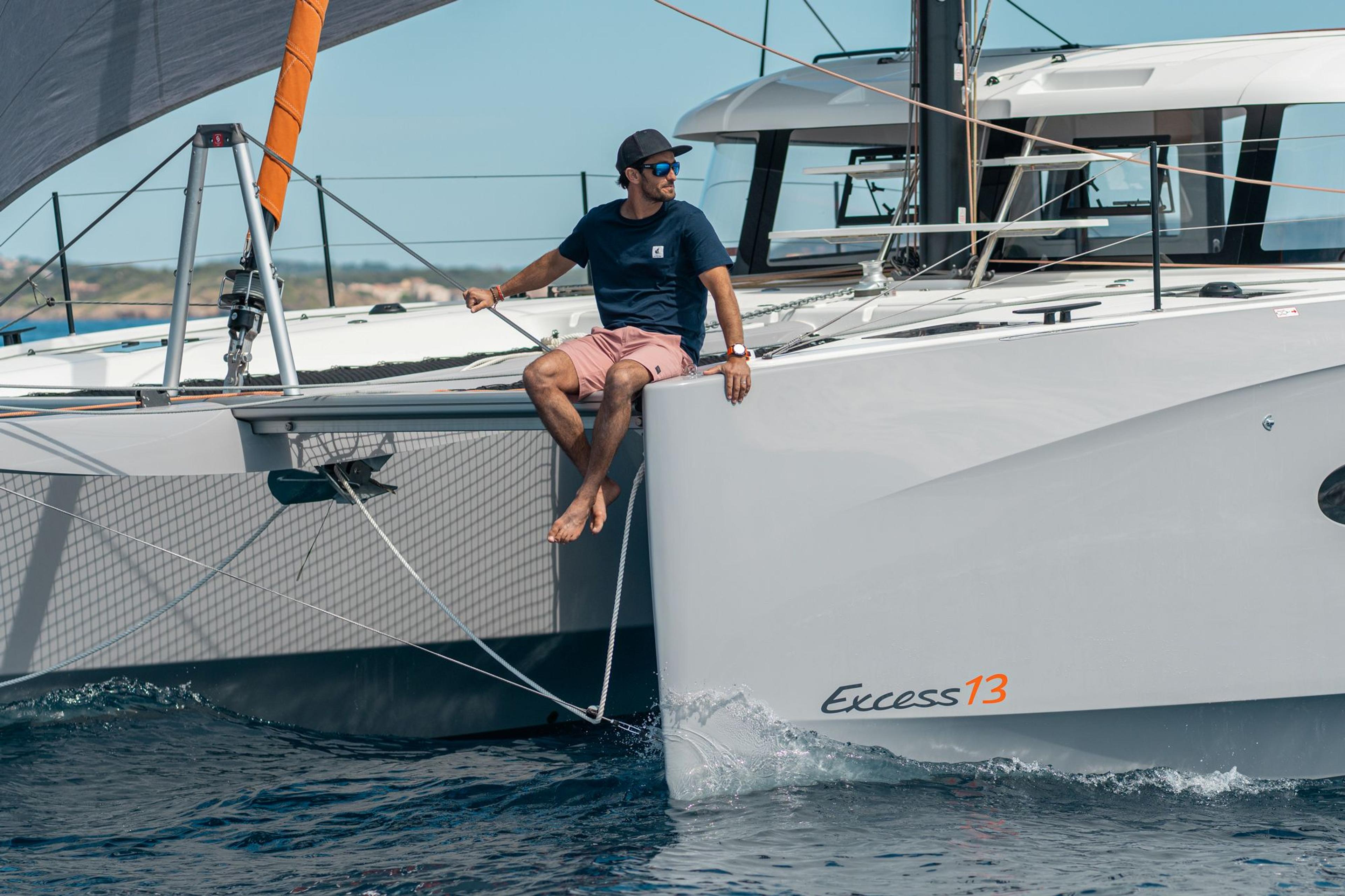
The Excess 13 is often selected by buyers who want a lively sailing experience without sacrificing practical comfort.
That phrase sounds simple, but what makes it meaningful is how often it holds true in real California programs: frequent short outings, occasional extended windows, mixed crew profiles, and weather variability that rewards adaptable operating systems.
Before deciding, connect this article with our Excess overview and ownership planning resources.
In many buyer journeys, the Excess 13 appears when priorities become clearer. You may start by chasing either maximum compact efficiency or maximum onboard volume, then realize your program needs a robust middle path.
The 13 tends to serve that middle path well. It often offers enough space to reduce day-to-day friction while preserving the responsive feel many owners value.
Top tip
"Best balance" is not universal. It is the balance that matches your annual usage rhythm, crew reality, and budget tolerance.
The strongest fit usually appears with crews running mixed programs: regular day sailing plus periodic longer trips. It also suits buyers who want versatility across conditions without optimizing for one extreme.
This is where honest self-assessment matters. If your crew cadence is irregular or your budget margin is tight, the right balance may shift. If your usage is frequent and structured, the Excess 13 often becomes compelling.
Our founder David, CEO of Sail Tahiti, has sailed extensively on all three Excess models. In many California programs, the Excess 13 repeatedly appears as a practical balance point.
Support your comparison with authoritative information:
Then pressure-test your assumptions through side-by-side planning, not just feature review.
A practical way to decide is to compare your typical operating month, not your aspirational scenario. Include berth logistics, crew availability, and recovery bandwidth after weather disruptions.
Then compare with Excess 11 realistic use cases and new vs pre-owned framework. This layered approach usually produces clearer decisions and fewer post-purchase doubts.
For many buyers, yes. It can be a strong first-purchase option when the ownership plan is structured and crew roles are clear. The model often provides enough margin for growth without immediately feeling operationally heavy. Fit quality still depends on your program, not just model reputation.
Not necessarily. Ambition becomes a problem only when planning and routine discipline are weak. Newer owners who build process early often adapt well and gain confidence steadily. The key is committing to a clear progression instead of relying on improvisation.
Start with alignment across three practical dimensions: crew profile, annual budget resilience, and expected usage cadence. If those three are coherent, model comparison becomes easier and more objective. If they are unclear, no model choice will feel truly stable. Clarity in these basics saves time and reduces decision noise.
Yes. Even if you suspect the 13 is your fit, a direct comparison with the 14 helps validate your comfort threshold and operating preferences. The purpose is not to "upgrade" by default. The purpose is to ensure your final decision is informed rather than assumed.
Often yes, because Southern California use commonly mixes varied day profiles, periodic longer windows, and shifting conditions that reward versatility. The 13 tends to handle that mixed environment effectively for many owners. Final suitability still depends on your route style, berth realities, and crew consistency.
Use a structured comparison matrix tied to real monthly operations, then challenge each assumption with budget and logistics data. This method reduces emotional bias and improves clarity quickly. Good decisions usually come from transparent tradeoffs, not from trying to eliminate all uncertainty.
Keep reading for more Excess updates, sailing tips, and stories from the cruising community.
A detailed buyer-profile framework to evaluate whether the Excess 14 aligns with your cruising ambition, operating discipline, and ownership economics.
Read articleA detailed model-fit analysis explaining when the Excess 11 is a strong choice for extended cruising and where structured tradeoffs matter most.
Read article