
Who Should Choose the Excess 14? A Buyer Profile Guide
A detailed buyer-profile framework to evaluate whether the Excess 14 aligns with your cruising ambition, operating discipline, and ownership economics.
Read article
What drives catamaran insurance costs in California in 2026: the premium factors that matter, harbor requirements, agreed value, and what to prepare before buying an Excess.
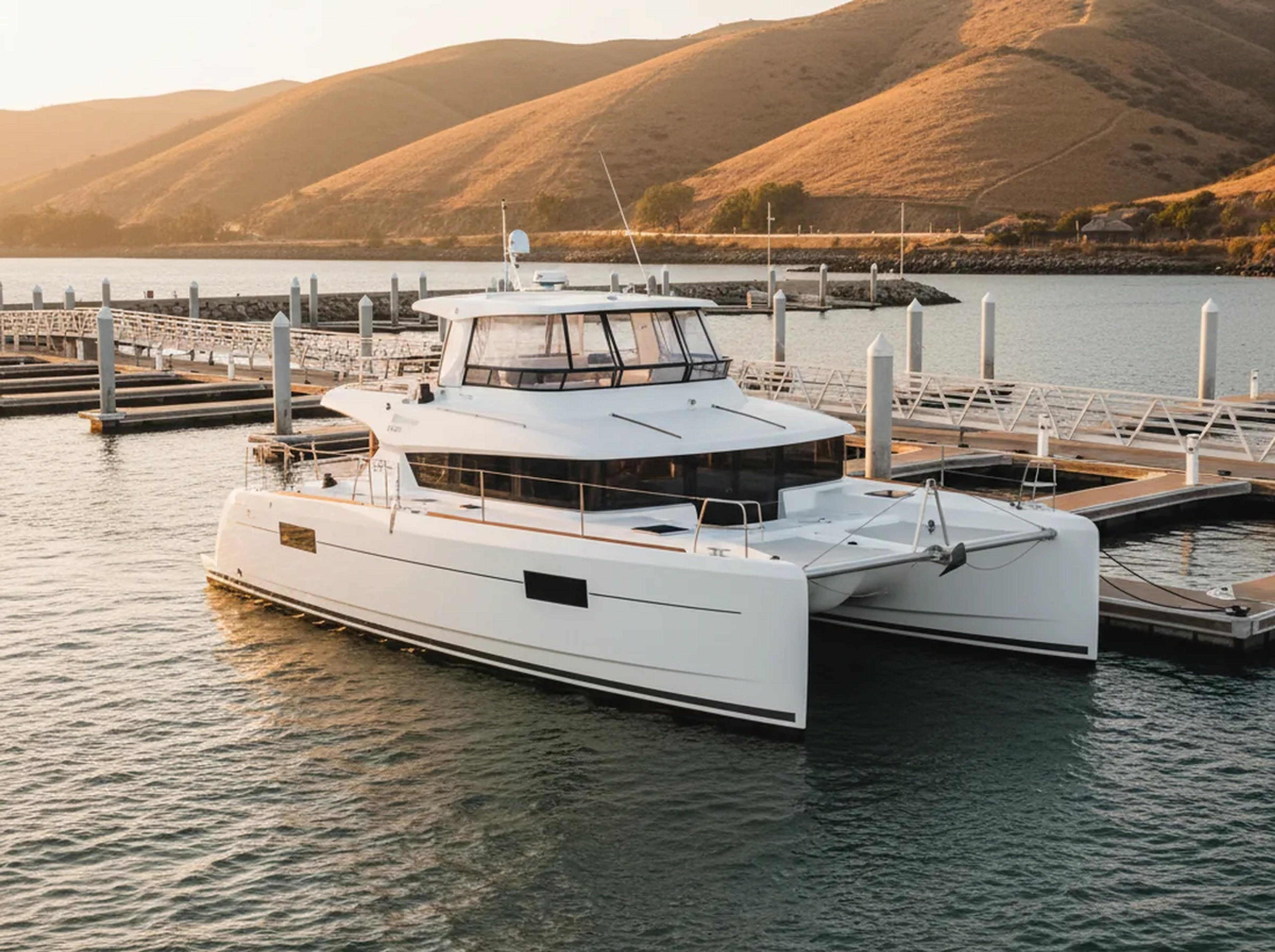
You have picked the model. The slip is realistic. The numbers work. Then the insurance question lands, and everything slows down. For first-time catamaran buyers, insurance is the ownership cost that most often stalls a confident purchase — not because coverage is hard to find, but because the premium depends on decisions you make before you buy.
The good news is that catamaran insurance in California is predictable once you know what underwriters actually look at. This guide ranks the factors that move your premium, explains why two hulls change the underwriting math, and gives you a shortlist of questions to ask before you sign. If you are still narrowing down the Excess model range, or want the full ownership view, our ownership resources cover the process alongside the costs.
The marine market entered 2026 in a soft cycle. Insurance Journal reported in March that yacht rates were holding flat to slightly decreasing as capacity returned, with one marine broker summarizing the shift as "the days of automatic 10% to 15% increases are definitely behind us."
California is the counterweight. Repair costs, labor, parts, and yard time have all risen, and carriers have tightened underwriting in response: more questions, more documentation, closer looks at age, condition, value, navigation area, and operator history — the picture The Log's 2026 marine insurance briefing draws from brokers at Pacific Ocean Marine.
So the market is two-speed: rates nationally flat-to-soft, underwriting and repair economics in California firmer. The practical read for a buyer: prepared applicants get better outcomes. A complete, honest application is now a pricing advantage, not paperwork.
Underwriters price from a short list of inputs, and the numbers below are the ones that recur across independent guides:
Ranked roughly by influence, the drivers are:
Notice what is not on the list: "the boat is a catamaran" alone. Multihulls are their own class, but every other input still applies.
The single most important coverage decision for a multihull is valuation. Policies are written one of two ways:
The Log's 2026 briefing quotes Pacific Ocean Marine on the gap: an ACV settlement "can result in a lower settlement than the owner expected." Agreed value typically costs 10–20% more, but it eliminates that depreciation gap — Casey Insurance's cost guide calls it the difference between coverage you can count on and coverage that negotiates against you.
Then there is the multihull premium itself. Catamaran coverage prices above comparable-length monohulls more often than not: twin engines or saildrives, a wider beam, more windage, and a thinner network of yards with wide haul-out capacity all raise replacement and repair costs. The benchmarks vary. Casey Insurance's 2026 table puts private-pleasure catamarans at 0.9–1.3% of hull value annually, while multihull brokers' rule of thumb runs 1.5–2% of declared value, and California and Pacific-risk hulls are often quoted near 2%. It is not an automatic surcharge: clean, well-documented boats with experienced skippers regularly land at the low end.
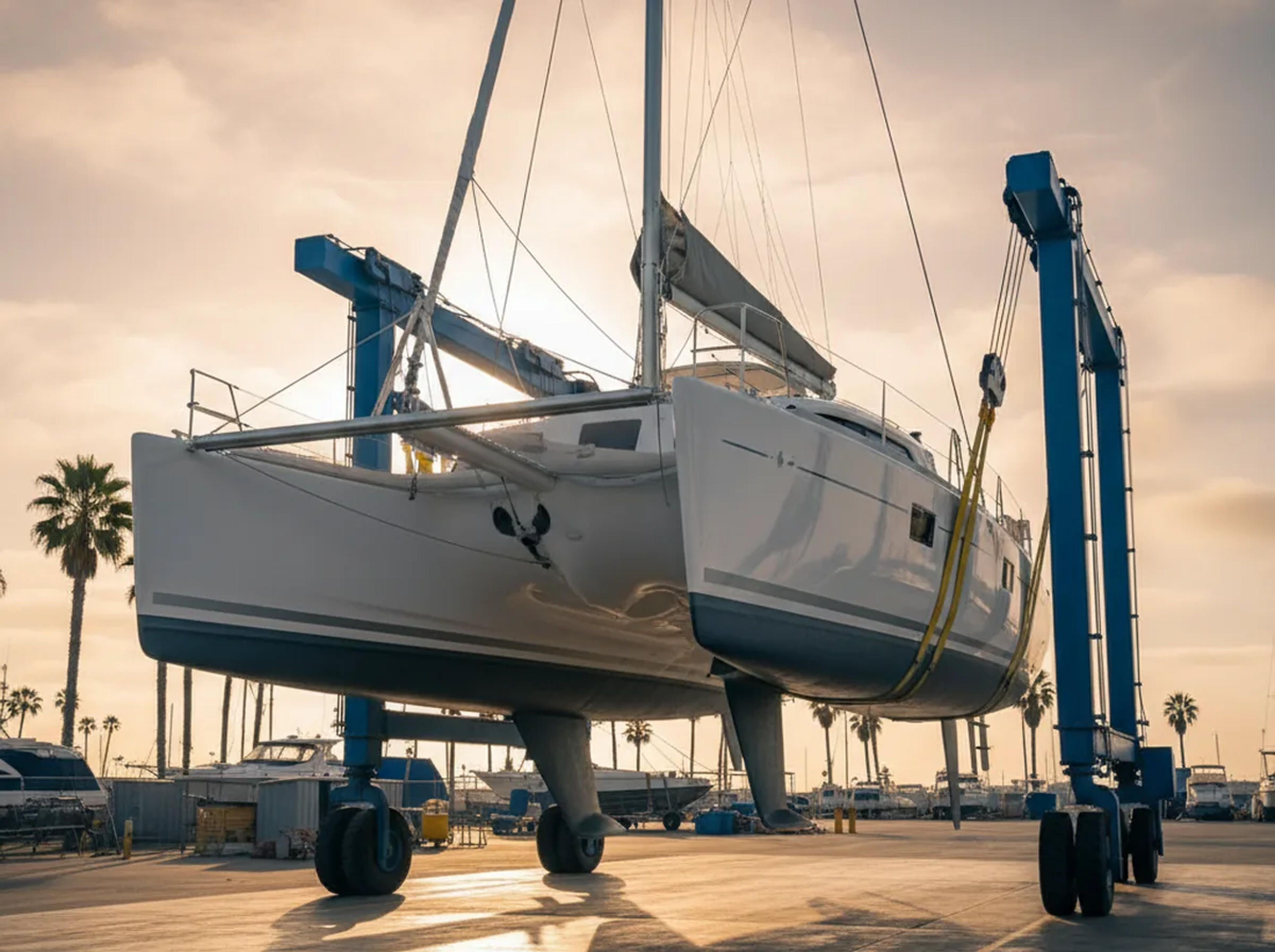
Excess-specific factors work in your favor. A new-build hull means no age discounting and usually no survey required. But the modern systems Excess buyers choose — lithium batteries, integrated electronics, solar — prompt underwriting questions, because improperly installed electrical systems raise fire risk and repair cost per The Log's 2026 insurance briefing. Have installation records ready before you apply. For official specifications on the Excess 11, 13, and 14, see the official Excess Catamarans website.
California does not require liability insurance to own or register a private recreational vessel. In practice it is mandatory anyway: every slip, mooring, and harbor agreement requires proof of coverage, usually with the harbor named as an additional insured.
Read that as a floor, not a target. $300,000–$500,000 of liability is the working baseline across Southern California, while the agreed value of the hull itself is a separate, larger decision.
The second California factor is navigation territory. Coastal miles and the open-Pacific passages to the Channel Islands are exactly the conditions underwriters want defined, and if Mexico figures in your plans — Ensenada this season, the Sea of Cortez later — declare it from the start. Carriers rate by declared territory, and a passage outside covered waters can leave you uninsured at the wrong moment; The Log's guide to Mexico liability coverage walks through the most common gap. Fall also brings the Santa Ana season, when gusty offshore winds make berth exposure and storm clauses worth a specific look at renewal. If you are comparing berthing options and their real cost and risk profile, our marina slip strategy guide for Southern California catamaran owners pairs naturally with this section.
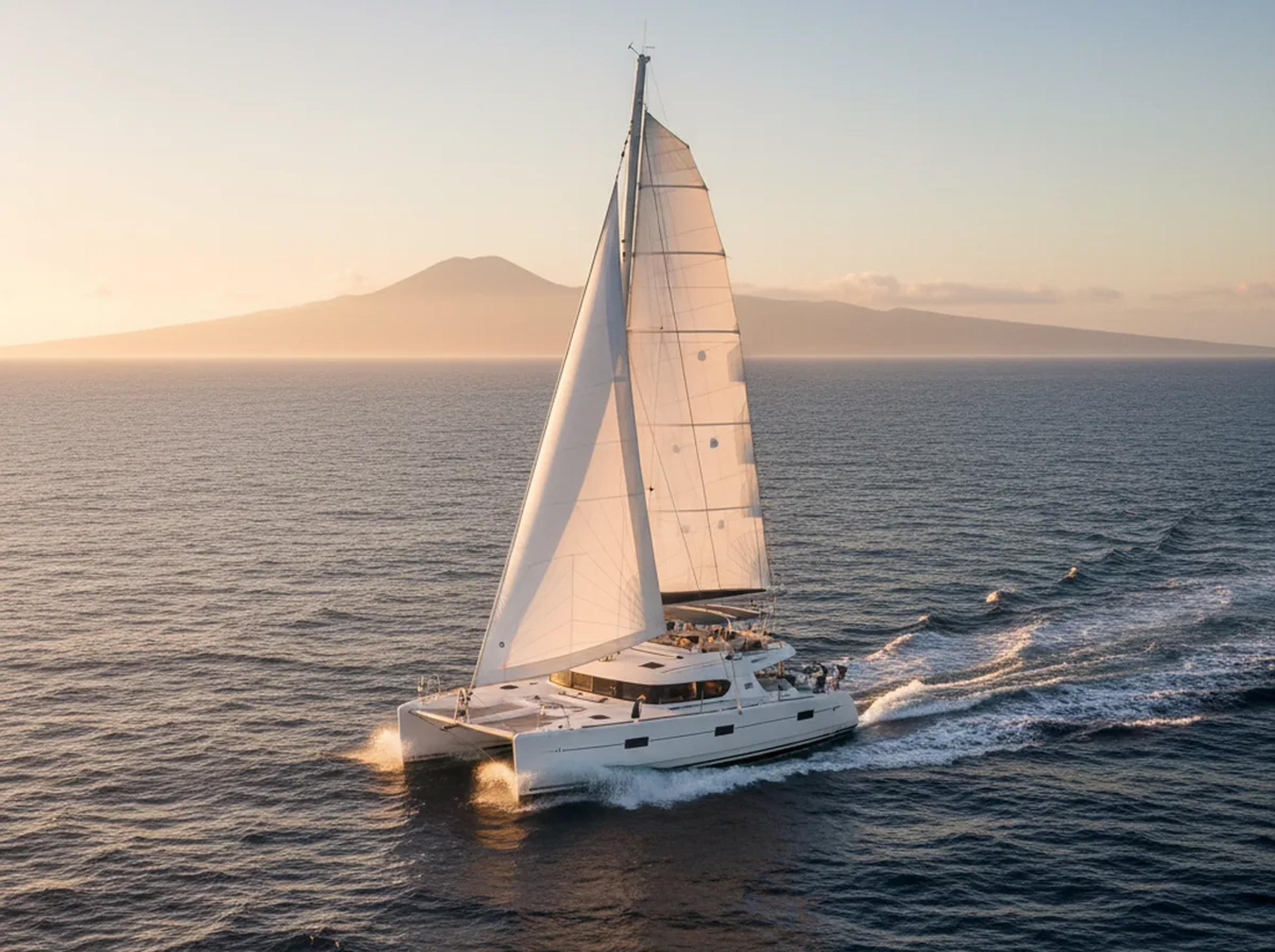
New-boat coverage is the easiest insurance you will ever buy for the boat. The agreed value is simply the invoice price — no depreciation argument on a total loss, and no pre-purchase survey, because the asset is factory-new. What most buyers underprepare is the paper trail for later years: keep the spec sheet, the invoice, commissioning records, and receipts for every upgrade from batteries to electronics to sails. The Log's insurance briefing is explicit — "a well-documented vessel is generally easier to underwrite, easier to value, and easier to support in the event of a claim."
If the new-versus-used question is still open, our new vs pre-owned catamaran decision guide covers how age changes the survey and valuation picture.
At Sail Pacific, insurance coordination is part of the purchase process. We walk first-time owners through what the underwriter will ask, so the quote stage does not stall the delivery timeline. The full process is laid out in our ownership resources.
The difference between a two-day quote and a two-week quote is usually documentation. Prepare before you contact a broker:
Get at least three quotes, and ask each agent the same questions: navigation limits and excluded waters, named operators and experience minimums, tender and dinghy coverage, layup requirements, deductible options, the valuation clause, and how additions like lithium systems are handled. Casey Insurance's premium factor guide is a practical checklist of what underwriters weigh.
Top tip
Compare coverage structure before you compare price. A quote that is 15% cheaper because it writes actual cash value instead of agreed value, or quietly excludes Mexico, is not cheaper — it is a different product. Ask for every quote on the same navigation plan and the same valuation basis, then compare.
Insurance is the recurring cost you can shape before you commit — through model choice, documentation, experience, and how you frame your cruising plans. If you are close to an Excess decision, we can help you validate the insurance picture against your target boat and home harbor, so the premium is a number you planned for rather than a surprise at the end of the purchase.
Our 2026 cost-to-own breakdown for Excess catamarans in California shows where insurance sits in the full ownership picture, and the month-by-month first-year budget guide helps you plan the cash flow around the same numbers.
No state law requires liability insurance to own or register a private recreational vessel. In practice, coverage is effectively mandatory: every slip and harbor agreement requires proof of it, with the harbor named as an additional insured. Santa Barbara's ordinance, effective January 1, 2026, sets a floor of $300,000 in liability with the city as additional insured; Newport Beach and the Port of Los Angeles require similar limits; San Diego's Sun Harbor Marina asks for $500,000. Budget for insurance from day one — you cannot berth without it.
Most private catamaran quotes land between roughly 1% and 2% of the agreed hull value per year. Casey Insurance's 2026 benchmark table puts private-pleasure catamarans at 0.9–1.3% of hull value annually, multihull brokers' guidance runs 1.5–2% of declared value, and California and Pacific-risk hulls are often quoted near 2%. As pure arithmetic, a $500,000 hull at 1–2% is $5,000–$10,000 per year — which is exactly why agreed value, skipper experience, and declared territory matter so much. Treat any percentage as a planning band, not a price quote.
Multihulls carry higher replacement and repair costs per foot: twin engines or saildrives, a wider beam, more windage, and a thinner network of yards with wide haul-out capacity. Industry pricing reflects that — Casey Insurance benchmarks catamarans at 0.9–1.3% of hull value versus roughly 0.75–1.5% for sailboats, and multihull specialists commonly quote 1.5–2%. It is not an automatic surcharge: new hulls, experienced multihull skippers, clean claims records, and complete documentation regularly land at the low end.
Agreed value means you and the carrier fix the hull's insured value at policy inception; on a total loss you receive that stated amount with no depreciation argument. Actual cash value pays the depreciated market value at the time of loss, which on a newer boat can be substantially less than you expected. For a new Excess, the agreed value is simply the invoice price, which makes total-loss math clean and predictable. Expect it to cost in the region of 10–20% more than an ACV policy — for a high-value new catamaran, that is the right premium to pay, and financed purchases typically require it anyway.
Materially. Casey Insurance's 2026 guide reports that first-time boat owners typically pay 10–20% more than experienced captains. Multihull-specific experience counts most: underwriters weight time on catamarans and documented passages, and formal training plus a clean record unlock discounts — safety course discounts commonly run 5–15%. If you are newer to sailing, log your multihull miles, consider structured catamaran training before applying, and expect the premium to improve as your record does.
Yes, because navigation territory is both a rating input and a coverage boundary. Coastal cruising is the baseline; passages beyond it — the open-Pacific crossings to the Channel Islands, runs to Ensenada and farther into Mexican waters — must be declared in your covered territory or an endorsement. Undeclared international passages risk a coverage gap exactly when you need it, and Mexico's liability requirements are commonly misunderstood. At application, state your full intended cruising radius — including trips you only plan for year two — and review the policy's navigation warranties at every renewal.
Treat renewal as a reassessment, not a formality. Check the valuation clause, named operators and experience minimums, tender and dinghy coverage, deductibles, exclusions and navigation warranties, layup requirements, and how the policy handles additions like lithium batteries or new electronics — upgraded systems raise replacement cost and should raise your insured value. If your usage is changing, renewal is the moment to declare it: new Mexico plans, more weeks aboard, a different home harbor. A marine broker with real catamaran appetite can restructure the policy so it keeps up with the boat.
Keep reading for more Excess updates, sailing tips, and stories from the cruising community.
A detailed buyer-profile framework to evaluate whether the Excess 14 aligns with your cruising ambition, operating discipline, and ownership economics.
Read articleA deeper practical analysis of why the Excess 13 is often a strong California balance point between sailing feel, onboard usability, and ownership flexibility.
Read article