Sail Pacific 241 Watchorn Walk, Berth 34
San Pedro, CA 90731 +1 310-619-6405
Follow us
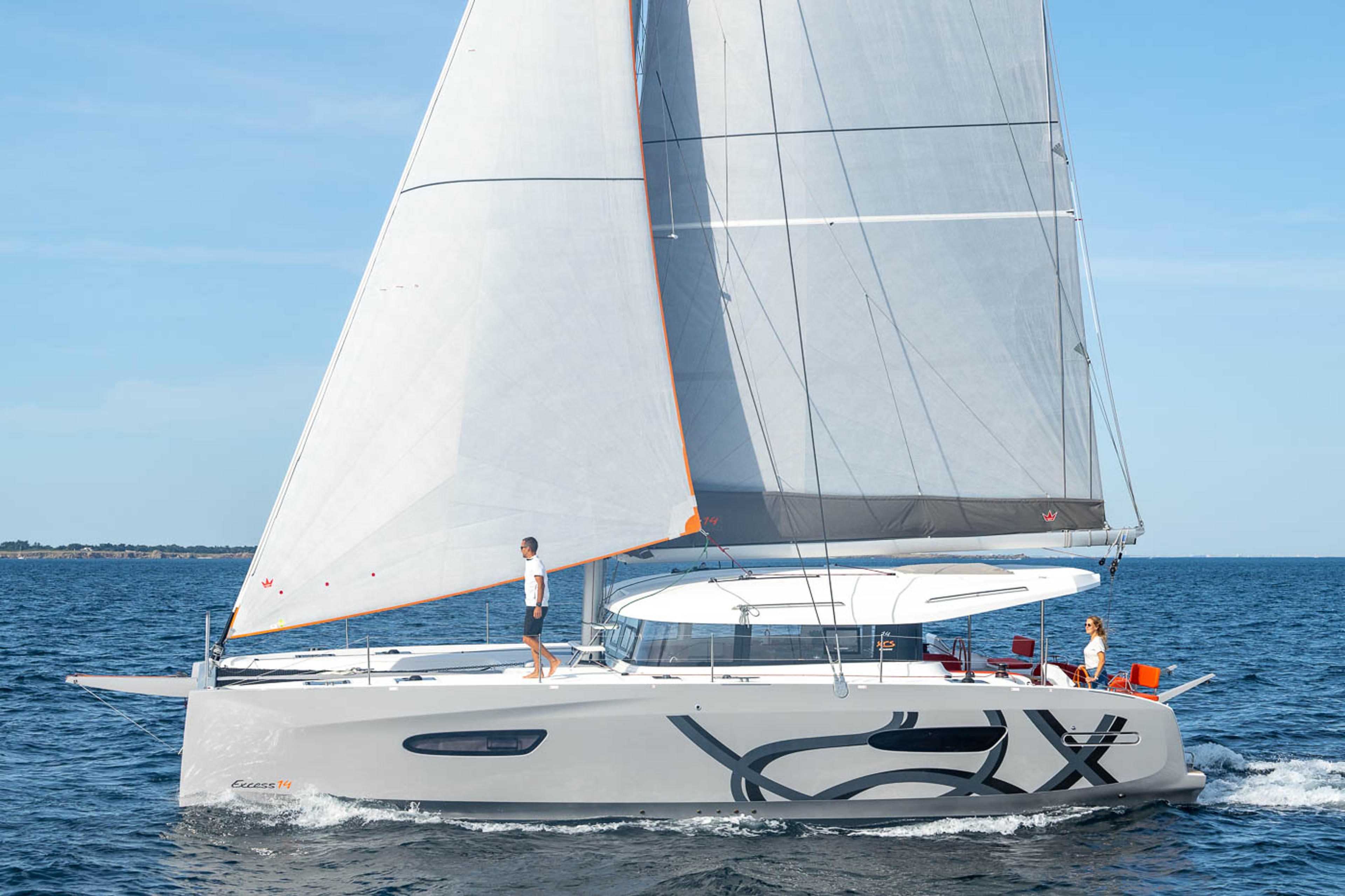
2026-09-17 - Who Should Choose the Excess 14? A Buyer Profile Guide
A detailed buyer-profile framework to evaluate whether the Excess 14 aligns with your cruising ambition, operating discipline, and ownership economics.
Choosing the Excess 14 is less about choosing "more boat" and more about choosing a larger ownership operating system.
That distinction matters. Bigger platforms can offer meaningful capability and comfort, but they also require stronger planning discipline, clearer crew consistency, and resilient ownership economics. The right choice is not the largest model available. The right choice is the model your program can support repeatedly and confidently.
Excess 14 often aligns with owners running sustained annual usage, medium-term cruising objectives, and structured operational habits. In these contexts, its additional margin can translate into a calmer onboard experience and better long-window usability.
Where fit weakens is usually not capability but execution gap: optimistic assumptions about crew availability, underestimated operating discipline, or budget models that depend on best-case conditions.
Top tip
If your plan only works when everything goes perfectly, it is not ready for a larger platform. Build margin first, then scale size.
Three checks before commitment
Use three practical checks before deciding:
Is your annual usage cadence realistic and consistent?
Is your ownership budget resilient under stress scenarios?
Is your crew autonomy strong for maneuvers and routines?
These checks convert aspiration into evidence. If all three are strong, Excess 14 can be an excellent fit. If one or more are weak, improve the system before increasing platform complexity.
Our founder David, CEO of Sail Tahiti, has sailed extensively on all three Excess models. With Excess 14, fit quality is usually a project-maturity question, not a desire question.
Sail Pacific Team, Model selection guidance
Support your comparison with trusted references
Use authoritative sources while evaluating assumptions:
Then anchor those inputs to your real operating data, not just ideal scenarios.
Program, budget, crew autonomy
3 Checks
Recommended projection horizon
24 Months
Decide from operating data, not assumptions
0 Guesswork
How to avoid a model mismatch
A common mismatch happens when buyers optimize for peak potential instead of typical use. Peak potential is attractive but often underused. Typical use is where ownership satisfaction is built.
Before finalizing, compare with Excess 11 realistic use cases and your own projected monthly workflow. If the system still looks coherent under non-ideal conditions, decision quality is strong.
No, but it is usually best for owners with mature planning and consistent operational discipline. Expertise helps, but system quality matters just as much: crew roles, process clarity, and decision cadence. Owners with strong learning frameworks can scale effectively even if they are not long-time experts.
Can it be a strong fit in Southern California?
Yes, particularly for programs with high annual usage and periodic extended cruising objectives. Southern California conditions reward crews that can adapt while maintaining process quality, and the Excess 14 can support that well when ownership systems are mature. Fit still depends on berth logistics, route style, and team consistency.
What is the key decision criterion?
The key criterion is alignment between program demands and your ability to execute them sustainably. If your real operating month supports the model without relying on optimistic assumptions, fit is likely strong. If your plan requires frequent exceptions to stay workable, reassess size or improve system design first.
Should I always target the largest model?
No. Larger is not automatically better if it reduces frequency of use or increases operational strain. The best model is the one your crew can operate confidently and consistently over time. Sustainable enjoyment usually comes from fit, not maximum dimensions.
How do I reduce sizing risk?
Use a 24-month projection with both baseline and stress scenarios, including budget resilience, berth strategy, and crew availability. This exposes weak assumptions early and improves decision confidence. Sizing risk falls sharply when your assumptions are explicit and tested.
What is the best next step after this analysis?
Translate your conclusions into a model-fit review with clear data points: usage cadence, financial margin, and crew capability thresholds. A structured review turns broad impressions into actionable decisions. That process usually shortens the path to a confident, durable choice.
More articles
Keep reading for more Excess updates, sailing tips, and stories from the cruising community.
Is the Excess 13 the Best Balance of Performance and Space for California Cruising?
A deeper practical analysis of why the Excess 13 is often a strong California balance point between sailing feel, onboard usability, and ownership flexibility.