Sail Pacific 241 Watchorn Walk, Berth 34
San Pedro, CA 90731 +1 310-619-6405
Follow us
2026-11-05 - Your First 90 Days With a New Catamaran: A Month-by-Month Owner's Plan
A concrete, phase-by-phase plan for your first 90 days of catamaran ownership — from handover and commissioning through registration, insurance, first overnights, and your first-season routines.
Why the First 90 Days Set the Tone for Years of Ownership
The delivery excitement is real — the boat is yours, the weekend is booked, the plans feel endless. Then the marina goes quiet, the checklist the dealer handed you sits on the galley counter, and a familiar question creeps in: what do I do now?
That stretch between signing and settling is where most ownership habits actually form. More to the point, it is the period where your first 90 days of catamaran ownership determine whether year one feels like a string of small wins or a series of postponed projects.
Most owners underestimate how much repetition it takes to feel truly at home on a multihull. The U.S. Coast Guard's national boating exposure research gives a useful frame: recreational boat owners average only a handful of trips a year, and first-time owners routinely use their boats far less in that opening season than the averages suggest.
Average annual boating outings per owner in U.S. Coast Guard recreational exposure data
~29
Average boating days per year across all registered boat owners
~19
The window that decides whether ownership becomes a rhythm or a roadblock
90 days
The SOURCE for that exposure figure is the National Recreational Boating Safety Survey, which tracks how often American boaters actually use their vessels. The takeaway is not discouraging — it is liberating. You do not need to log epic miles in the first quarter. You need a plan that converts the natural enthusiasm of those first 90 days into durable routine, one phase at a time.
A boat becomes 'yours' the day the routine feels automatic — not the day you cross a distance milestone.
Days 1–10: The Handover, Commissioning Walkthrough, and Systems Briefing
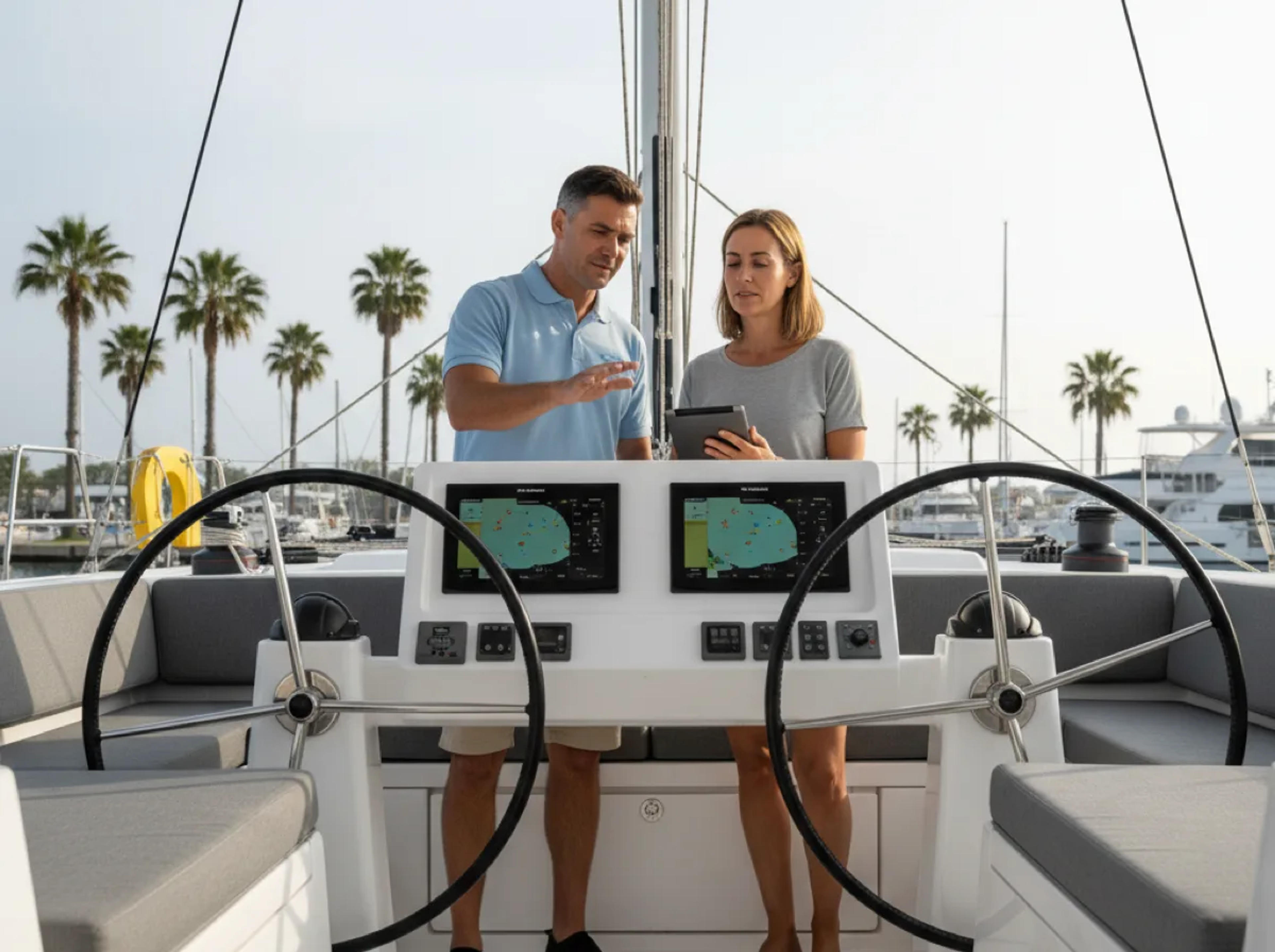
Plan the handover as an event worth clearing your calendar for, not a checkbox between errands. Block at least two days around delivery: one focused on the commissioning walkthrough and one for a real sea trial in local water.
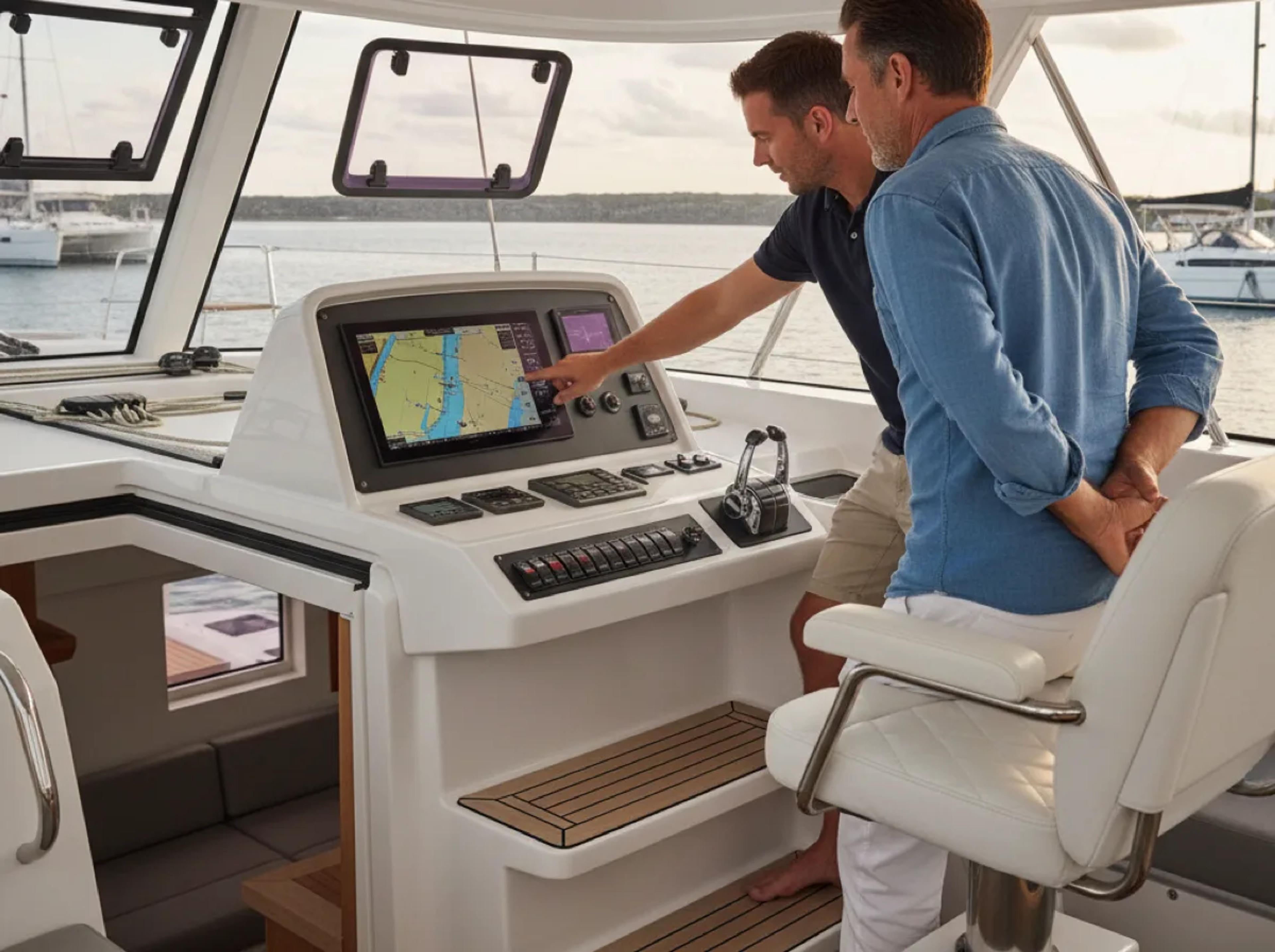
Commit to a rule from day one: never let anyone hand over a system you have not personally operated. On a catamaran that means engines and throttles, sail handling top to bottom, the windlass and anchoring gear, generators and electrical panels, tankage and plumbing, and every electronics screen from chartplotter to VHF. Step through each one, ask the "what does this actually do" question more than once, and write down what you were told in your own words. That written record is what you will reach for in week six, not the dealer's glossy manual.
You can grade your own coverage against something like our Excess sea trial checklist for first-time buyers, which frames these checks as decision-grade questions. If you are buying through a dealer like Sail Pacific, commissioning follows the established Excess delivery process — the same structured briefing that Excess Catamarans and its partner yards build into every new build, and the kind of handover process that Sail Tahiti crews are used to running on the water side of things.
One discipline saves more headaches than any other here: get every warranty-relevant item confirmed in writing before the crew leaves. A scratch on a gelcoat, a temperamental electronics display, a hatch that does not seat straight — if it was not noted at handover, it becomes a dispute later. Photograph each area, date the photos, and attach them to the commissioning record.
Days 1–30: Registration, Insurance, Slip, and Safety Baseline
With the boat in your hands, the administrative stack deserves its own lane in the first month. It is not glamorous, but it is the foundation every later cruise sits on.
Tackle California registration through the DMV / Department of Housing and Community Services used for vessel documentation — and decide early whether you want a documented vessel (federal, via the U.S. Coast Guard certificate of documentation) or a state-numbered one. Many catamaran owners choose documentation for the financing and resale clarity it brings, but whichever route you take, be deliberate and do not assume the dealer handled it.
Next, insurance before the boat's first serious outing — ideally before it leaves the yard. Make sure your policy is agreed value rather than depreciating market value, and that the named perils line up with how and where a California cruiser actually operates. Our California catamaran insurance premium guide walks through the cost drivers and what to demand from a policy.
Then build the safety baseline for your home waters. At minimum that means U.S. Coast Guard-required gear for the vessel's size, a registered EPIRB, and a full set of checked and dated flares. Add a basic diesel and engine maintenance course — the hours pay for themselves the first time you troubleshoot something on your own rather than calling a technician for a diagnostic visit.
Weeks 1–4: Practice Everything at the Dock and in the Harbor
This is the phase where most first-season owners underinvest, because it feels like it is not real sailing. It is exactly the phase where the skills that make the rest of the year effortless get built.
Spend your first weeks on deliberate repetition in constrained spaces. Run docking drills in real wind and current until maneuvering stops feeling like a gamble. Set and reset the anchor in a confined harbor anchorage until the windlass, snubber, and scope all feel instinctive — the muscle memory you want before you are doing it at dusk in an unfamiliar cove. Load the systems — power, water, refrigeration, batteries — under load and watch what actually draws what. The docking in wind habits everyone who struggles with a wide-beam multihull eventually learns are built in exactly these quiet marina hours, and our Southern California anchoring playbook turns the practice into a repeatable routine rather than a series of rescues.
The single highest-leverage decision you can make in month one is hiring a professional coach for a handful of sessions. A good coach watches you dock, anchor, and handle the boat in ways you cannot see from inside it, and corrects small habits before they calcify. It is cheaper than the first gelcoat repair from a bad approach.
Top tip
In the first month, prioritize repetition over distance. Repeat a strong marina and anchorage routine until it feels automatic — the confidence from thirty clean docking runs beats the memory of one dramatic passage.
Months 2–3: Your First Overnights and Familiar Southern California Routes
Once the dockwork feels repeatable, graduate to short overnights. Start with a Catalina run — close enough that a weather change is a non-event — and only then consider a Channel Islands trip inside a defined, forecast-clear weather window.
Book a calm evening at a Catalina anchorage first: it gives you a full night aboard, an anchor watch, and one dawn systems check without any real exposure. From there, build toward a 48-hour passage specifically to test the boat under way — engines at cruise, the galley in seaway, generator and battery bank through the night, and the crew watch rotation. The goal is not to see a new island; it is to surface every weak point on your own boat in a controlled way.
Keep itineraries matched to crew skill rather than ambition. Our three first itineraries for new catamaran owners lay out exactly this progression, from a Catalina confidence weekend to a multi-day Channel Islands loop.
Months 2–3: Set Up Your Maintenance, Budget, and Log Routines
By the time the boat is getting real use, the paperwork needs to catch up — not the other way around. This is where owners quietly diverge into two camps: those who have a system, and those who are a season behind on everything.
Build a monthly maintenance calendar while the year is still young. It does not need to be elaborate — a rolling list of what gets checked every month, every quarter, and before each crossing applies to engines, rigging, through-hulls, electronics, and the bottom. Tie it to the same monthly catamaran ownership budget framework you will actually maintain, so money and maintenance move on the same cadence.
Keep a commissioning and log book from day one: hours on engines, what you changed, what you noticed, what you fixed. Logging is the tool you will thank yourself for at the first haul-out, when the surveyor or yard asks what has been done to the boat. Speaking of the haul-out — plan the first bottom service proactively on the calendar now, so it lands in a maintenance window instead of an emergency gap between trips. For the full ownership-side picture — costs, servicing rhythm, and what to expect once the honeymoon phase settles — our ownership resources cover the ground beyond the first quarter.
A Simple 90-Day Checklist to Print or Bookmark
Here is the whole plan as a printable list, phase by phase. Bookmark it, tape it in the nav station, or file it with the commissioning record.
Days 1–10 — handover: block two days, walk every system yourself, confirm warranty items in writing, complete the sea trial.
Days 1–30 — admin baseline: register or document the vessel, bind agreed-value insurance, finalize the slip, ship the safety gear and EPIRB, book the engine course.
Weeks 1–4 — dockwork: run docking drills, set and reset the anchor in the harbor, load-test systems, consider a coach.
Months 2–3 — first overnights: sail to Catalina, then a 48-hour passage, then a Channel Islands window; keep itinerary matched to crew skill.
Months 2–3 — routines: launch the monthly maintenance calendar, start the budget tracker, keep the log, schedule the first haul-out.
Ongoing: review weather before every departure and hold a written go/no-go.
When Your 90 Days Are Up: What Realistic Ownership Looks Like
The honest answer after three months is that the boat is still teaching you things — and it should be. What changes is the texture of ownership: the anxiety that marked the first weeks gives way to a working routine, systems stop surprising you, and the weekend no longer starts from a blank "now what" every time you step aboard.
The measure of a good first 90 days is not how far you sailed. It is whether frequent, healthy use has become the default. A boat that is used becomes a source of routine and satisfaction; a boat that is not quietly becomes a storage project. Everything in this plan is built to point at that one outcome.
Sail Pacific exists to be the partner across this whole arc — not just for the sale, but for the commissioning briefings, the training referrals, and the support questions that arrive in month two and year five alike. When the first 90 days feel managed and the routine is holding, talk to us about what comes next for your cruising, or for the family aboard.
When should I schedule my first service or haul-out?
Schedule the first bottom service and full inspection proactively — ideally in the first season once you have a sense of how the boat is used — rather than waiting for a problem. Book it into the maintenance calendar during months two to three so it lands in a window instead of leaving the boat unavailable when you want it most. Most owners find a detailed first-year service after a season of real use surfaces the weak points worth correcting early.
What should I do on the very first walkthrough with my dealer?
Treat it as a working session, not a social one: operate every system with your own hands, from engines and sail handling through windlass, generators, tankage, and electronics, and photograph each area while noting the condition in your own words. Confirm any warranty-relevant item in writing before the handover crew leaves. The written record you produce is your reference for month two and the evidence base for the boat's first warranty conversations.
Do I need insurance before the boat leaves the yard?
Yes — treat insurance as a prerequisite to the boat moving under its own power. For a new catamaran, push for agreed-value coverage rather than a depreciating market-value policy, and make sure the named perils reflect how a Southern California owner actually cruises. Getting it bound early also protects the boat during the handover period, when the risk profile is easiest to misjudge.
How long before my first ocean crossing or overnight passage?
There is no fixed number, but a disciplined progression — weeks of dockwork, then a Catalina overnight, then a 48-hour passage — usually puts a new owner in a good position to consider longer legs within the first season. The requirement is not elapsed time but proven readiness: crew skill, weather discipline, and a boat whose systems you have already seen perform overnight. Match the itinerary to the crew, not to a calendar.
What safety gear is required for coastal Southern California versus offshore?
The base requirement is U.S. Coast Guard gear sized to the vessel — PFDs, flares, a sound signal, and navigation equipment — which applies coastal, with an EPIRB worthwhile for any extended trip. Offshore adds redundancy, heavier anchor and ground tackle, and more conservative weather margins. Use the Coast Guard and National Weather Service sources (the USCG boating safety site and NWS marine forecast pages) to match the boat's gear and operating envelope to where you actually sail.
Should I hire a coach or do a sea trial within the first month?
Do both, but for different reasons. The sea trial during the handover is about confirming the boat's systems and handling fit you — do it in the first ten days. A coach in the first month is about correcting your own docking and anchoring technique before it hardens; it is the highest-leverage purchase in that window. Between the two, the coach tends to be the one first-time owners skip and most regret skipping.
More articles
Keep reading for more Excess updates, sailing tips, and stories from the cruising community.
Power, Solar, and Water Planning for Weekend-to-Weeklong Catamaran Trips
How to plan catamaran electrical systems, solar, and water for weekend-to-weeklong Southern California trips: factory specs, power budgets, solar sizing math, and tankage for Excess catamarans.
Catamaran Insurance in California: What Impacts Your Premium Most
What drives catamaran insurance costs in California in 2026: the premium factors that matter, harbor requirements, agreed value, and what to prepare before buying an Excess.